


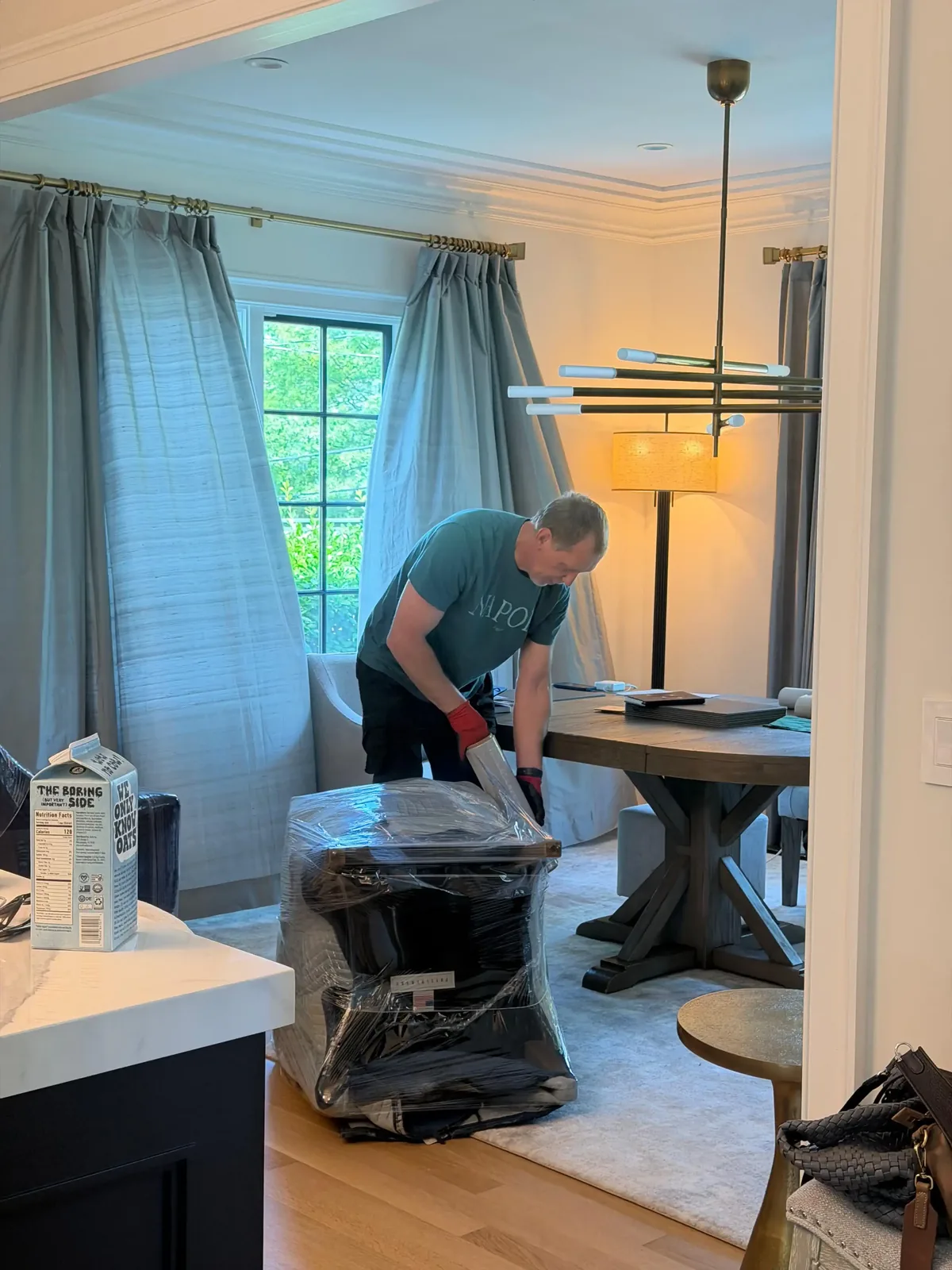
Good packing makes boxes easier to handle and helps you find what you need after delivery. Start with the inventory and the packing responsibilities agreed with your mover. Ordinary household boxes, fragile belongings and specialist items may need different preparation.
Sort and list before buying materials
Decide what is moving, then estimate the boxes needed for each room. Use sturdy boxes, suitable cushioning and packing tape. Pack dense items such as books in smaller boxes and keep every box manageable. Do not rely on a suitcase's wheels as a reason to overload it; someone still has to lift it.
Pack fragile items for the contents
Wrap items individually where appropriate and fill empty space so they do not shift inside the box. Linens can cushion some household belongings, but they do not replace suitable protection for every fragile or high-value object. Tell the mover about artwork, antiques or other items needing a separate assessment.
A piano is not an ordinary boxed item. Our piano movers assess the instrument and access before agreeing the handling plan.
Organise clothes and everyday items
Fold or bundle clothes in a way that suits the fabric and the available container. Keep clean, dry textiles separate from liquids or items that could stain them. Avoid overfilling boxes or promising yourself that one packing method will prevent every crease.

Label for unloading
Write the destination room and a short description on each box. Use consistent room names at both addresses. If the shipment is travelling in stages, number boxes and keep a corresponding inventory so you can check what has arrived.
Prepare furniture with the crew's plan in mind
Agree whether drawers must be emptied and which furniture will be dismantled. Do not leave heavy contents inside a dresser or assume wrapping it makes the load safe. Bag and label fittings, and follow the manufacturer's instructions for pieces requiring specialist assembly.
Keep essential items outside the main shipment
Carry keys, documents, medications, chargers and the supplies you will need before delivery. Photograph electronic connections before disconnecting them, label cables and follow the manufacturer's packing instructions. Keep any required work or school devices accessible.
Match preparation to the route
For local GTA moves, coordinate box readiness with the building's loading window. For long-distance moves, plan your essentials around the agreed delivery window and keep an inventory.
For Canada to USA moving, discuss the shipment list and any restricted items before packing. Read the customs preparation guide for the separate documentation steps.
When to ask for packing help
If you cannot finish the boxes or have items you are unsure how to protect, ask about packing and unpacking services. Agree the items, materials and labour included in the estimate before moving day.